
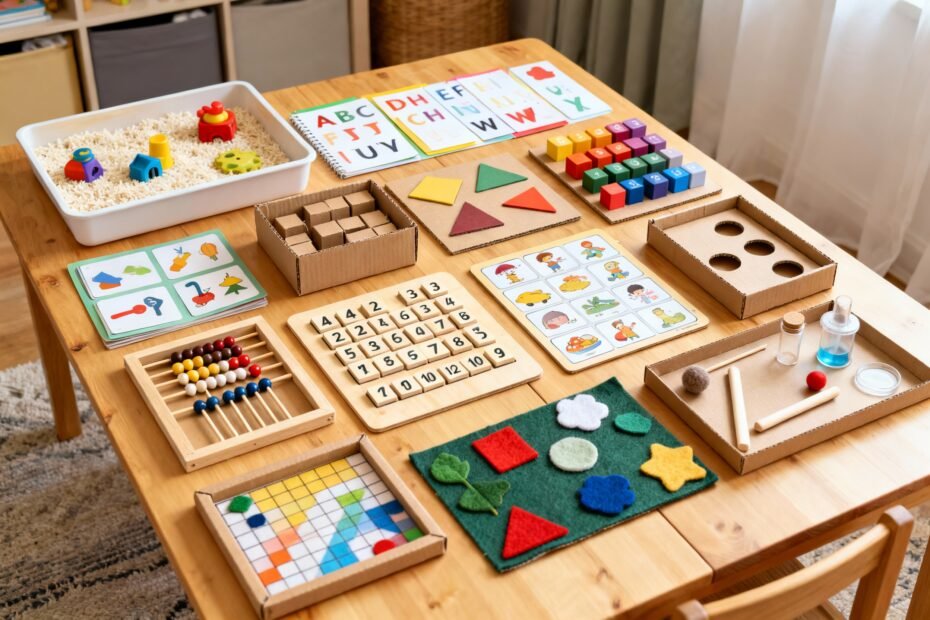
You’ve got curious kids, a rainy afternoon, and zero desire to spend money on flashy learning toys. Perfect. You can turn everyday stuff—cardboard, markers, bottle caps—into brain-boosting games in under 15 minutes.
Ready to make your home feel like a low-key learning lab without the stress? Let’s build some fun.
Why DIY Learning Games Work (and Don’t Eat Your Wallet)
You don’t need fancy kits to teach math, reading, or problem-solving. Kids learn best when they touch, move, and laugh.
DIY games use what you already own, so you can tweak them for any age or skill level. FYI: They also keep kids off screens longer than you’d expect. Magic?
Nope. Just good design with a side of duct tape.
10 Easy DIY Learning Games You Can Make Today
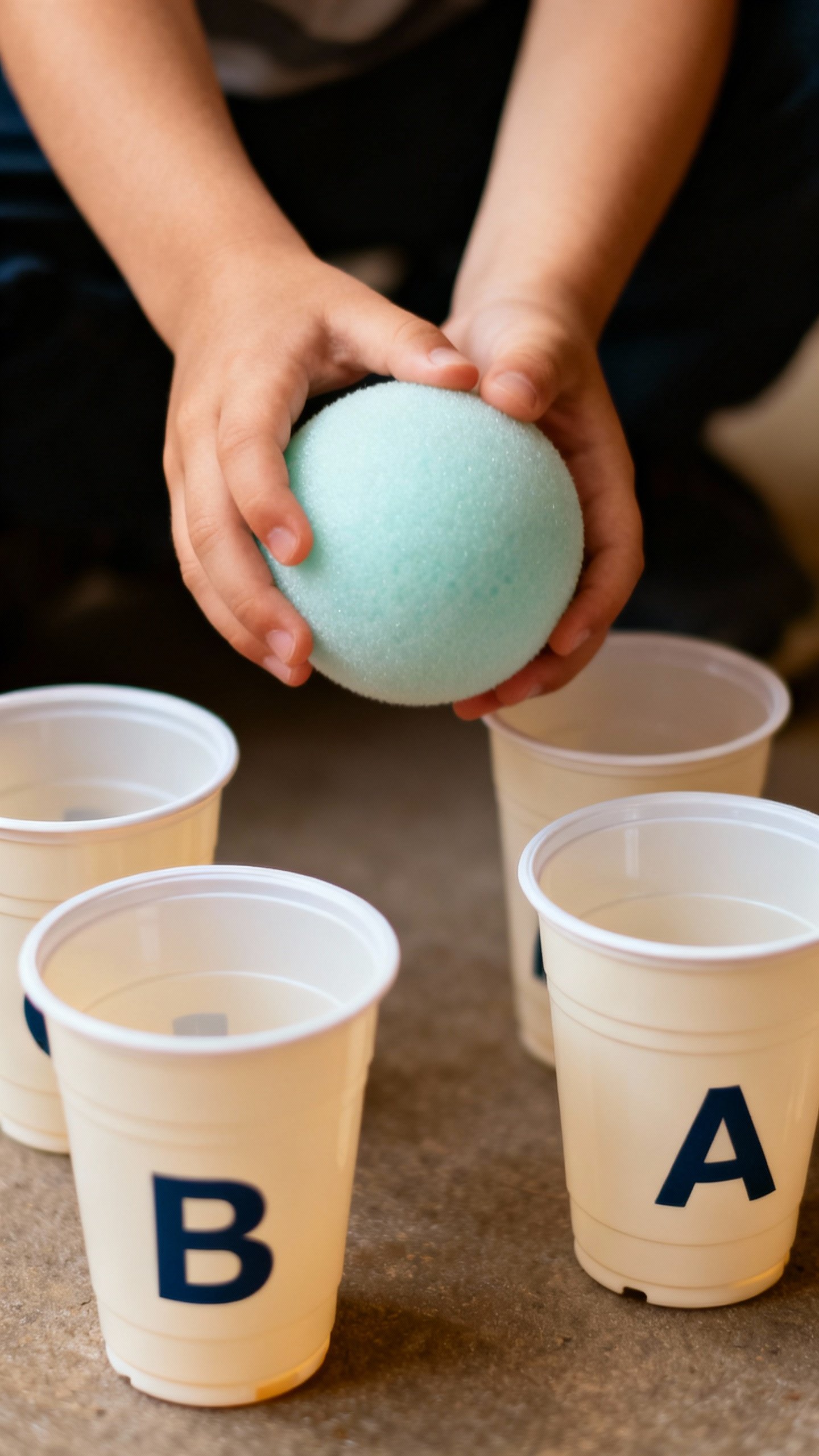
- Letter Bowling
Grab 10 plastic cups and write letters on them. Roll a soft ball to “bowl” a few over, then shout a word that uses those letters.For beginners, use just letters in their name. For older kids, switch to digraphs like “sh,” “ch,” “th.”
Skills: phonics, spelling, motor coordination - Math Match Sticks
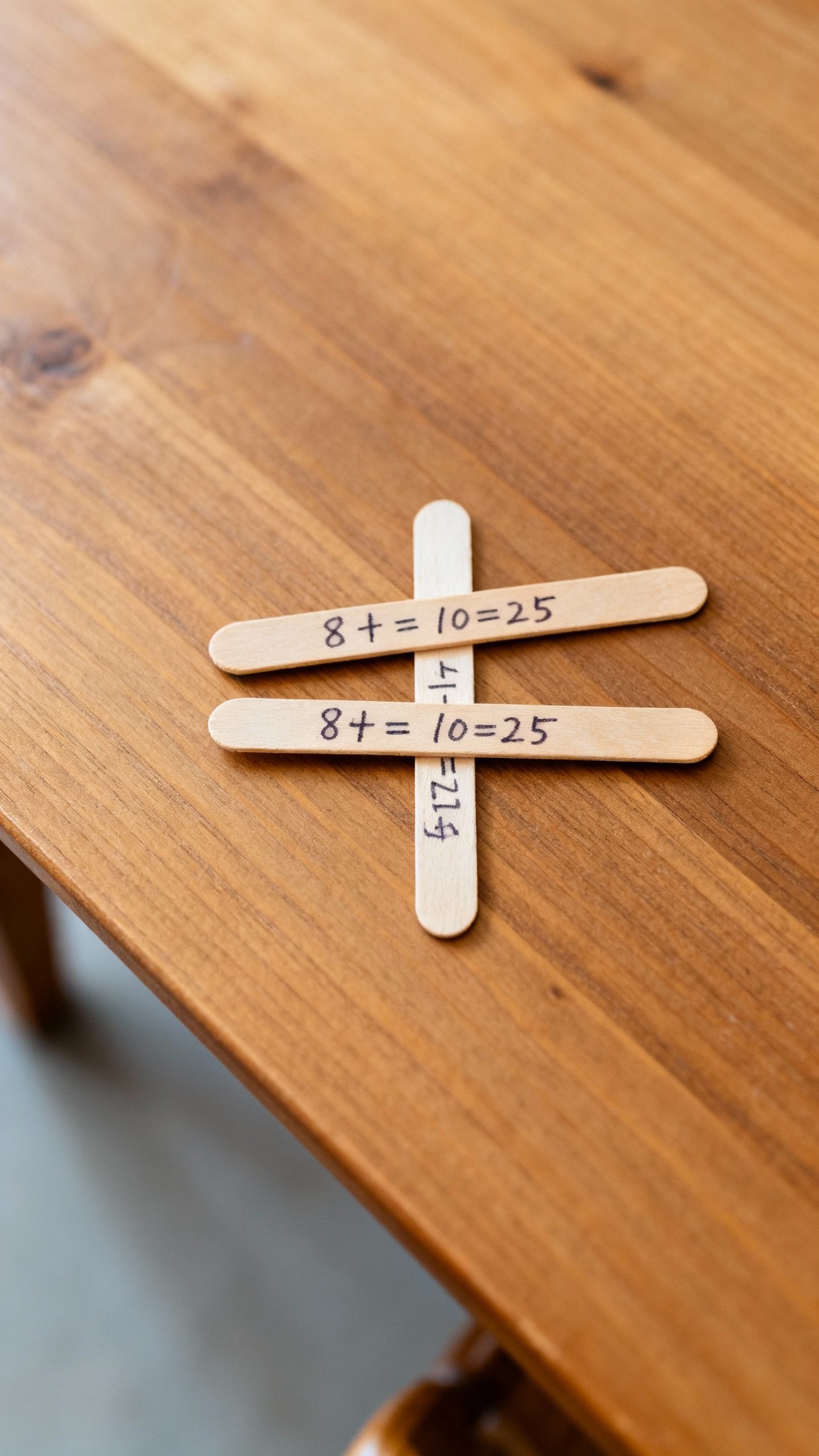
Write simple equations on popsicle sticks (e.g., 4+3, 9-2) and answers on other sticks. Kids match problem to solution like dominoes.Up the challenge with multiplication or fractions (IMO, fractions become way less scary this way).
Skills: arithmetic, logic, focus - Treasure Map Directions
Draw a simple floor map of one room. Hide a “treasure” (sticker, snack, LEGO minifig) and write directions: “Start at the couch. Take 3 steps north.Turn right. Hop 2 times.” Let kids write their own maps next time for you to follow—role reversal = instant buy-in.
Skills: spatial awareness, following directions, early coding concepts - Sound Sorting Cups
Label cups with letter sounds: “b,” “m,” “s,” etc. Collect small items (button, marble, sock) and sort by initial sound.For readers, switch to ending sounds or blends like “sp” and “tr.” Add a timer for drama because kids love fake urgency.
Skills: phonemic awareness, vocabulary - Fraction Pizza Party
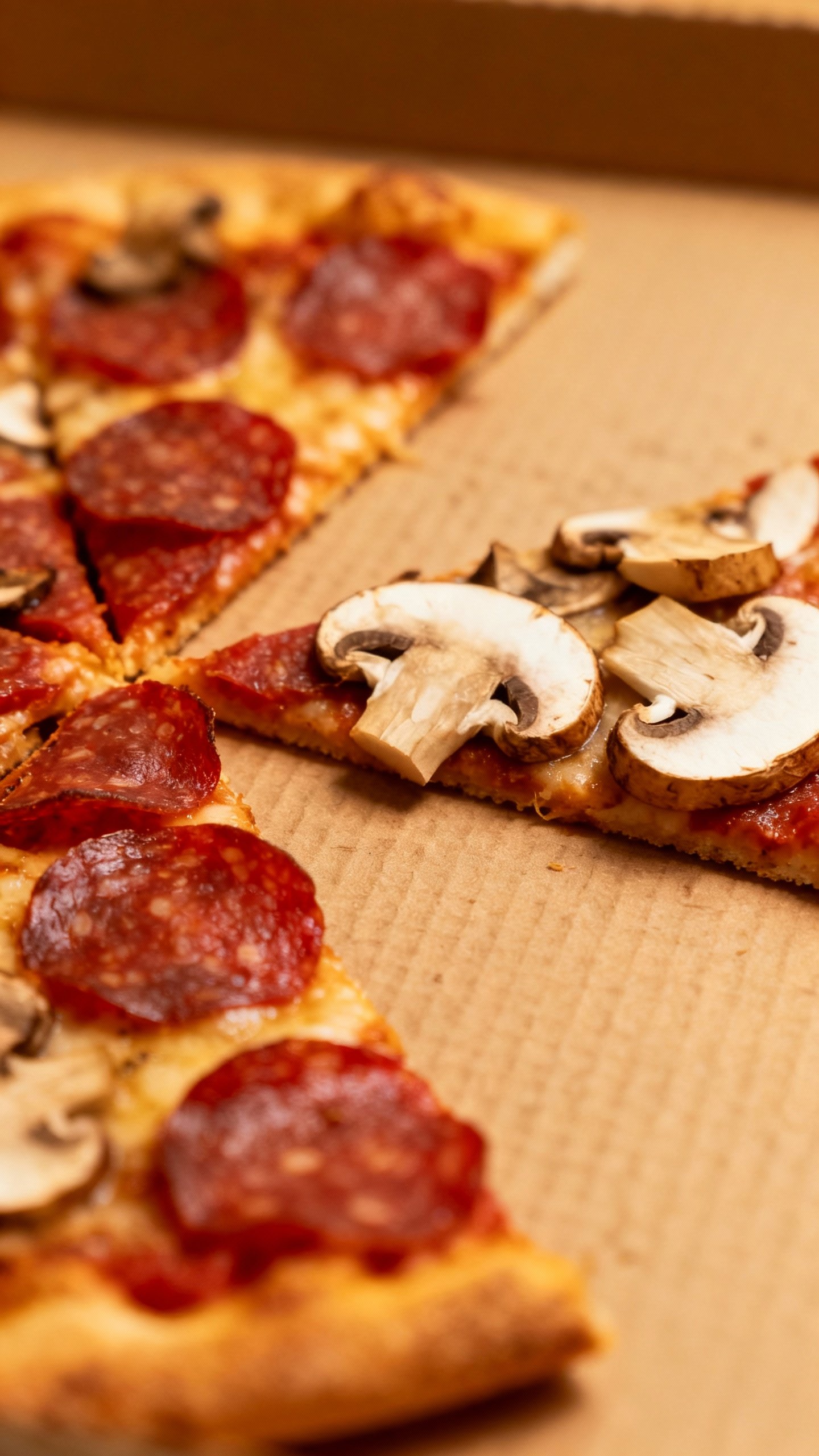
Cut cardboard circles into halves, thirds, quarters, eighths. Kids “order” a pizza: “I want 3/4 pepperoni and 1/4 mushroom.” They build it with markers or paper toppings. Sneak in equivalent fractions: “Can 2/4 equal 1/2?” Boom—math and lunch role-play.
Skills: fractions, equivalency, creative play - Sock Toss Sight Words
Tape sight words to the floor in a grid.Toss balled-up socks onto a word and read it aloud. For older kids, use vocabulary or definitions: hit the word, give the meaning or use it in a sentence. Add “double points” corners if you’re feeling extra.
Skills: reading fluency, vocabulary, gross motor skills - Pattern Train
Make a “train” with colored blocks or bottle caps: red, red, blue, red, red, blue.Ask kids to continue the pattern or build their own. Level up with ABAB, AABB, ABC, or even shape+color combos. Pattern boss status: unlocked.
Skills: early math, logic, attention to detail - Mystery Bag STEM Challenge
Fill a bag with random items (paper clips, straws, tape, rubber bands).Give a challenge: “Build a bridge that holds 10 coins,” or “Create the tallest tower in 5 minutes.” Set a timer and hype it like a cooking show. FYI: Failure counts as learning here.
Skills: engineering, problem-solving, resilience - Story Cubes (DIY Edition)
Make six paper cubes. Draw or write prompts on each: character, setting, object, emotion, action, twist.Roll and tell a story using whatever pops up. The weirder the combo, the better the giggles. Yes, adults must participate too—house rules.
Skills: storytelling, creativity, sequencing - Time Trial Cleanup Categories
Write categories on sticky notes: animals, shapes, numbers, colors.Scatter small toys or printed pics. Start a 60-second timer: “Find and sort everything that’s a triangle,” or “Collect all mammals.” You get a clean floor and they get a brain workout. Win-win.
Skills: classification, speed processing, executive function
Supplies You Probably Already Have
- Paper goods: scrap paper, index cards, cardboard, paper plates
- Writing tools: markers, crayons, sticky notes, highlighters
- Household items: cups, socks, tape, glue, bottle caps, rubber bands
- Recyclables: cereal boxes, egg cartons, jars, lids
- Wild cards: dice, coins, stickers, string
Quick Tip: Make It Durable
- Laminate with packing tape if tiny hands get enthusiastic.
- Store pieces in zip bags and label them.
Future you will thank you.
- Use bold colors so everything reads clearly from across the room.
How to Level Up for Different Ages
One game, three difficulty settings. That’s the sweet spot. Keep the core idea, upgrade the challenge.
Pre-K and Kindergarten
- Focus on letters, sounds, counting to 20, simple patterns.
- Use big visuals and short rounds (2–5 minutes).
- Celebrate tiny wins loudly.
Stickers are currency.
Early Elementary
- Add addition/subtraction up to 100, blends, sight words, basic maps.
- Introduce timers and team play.
- Let kids design rules. Ownership = motivation.
Upper Elementary
- Bring in multiplication, fractions, multi-step directions, story structure.
- Encourage strategy—scoring systems, bonus rounds, penalties.
- Add reflection: “What worked? What would you change?”
Keep It Fun, Not Fussy
Short sessions beat marathon lessons.
Rotate games so they feel fresh. If a game flops, pivot fast—no shame, no problem. IMO: the best learning sneaks in while kids think they’re just playing.
Motivation Hacks
- Point trackers: earn points for effort, not just wins.
- Classroom of one: let them “teach” you the game tomorrow.
- Theme weeks: pirates, space, jungle—reskin the same game.
Safety and Sanity Notes
- Skip tiny parts with toddlers.
Obvious but important.
- Clear play space for anything involving throwing or rolling.
- Use non-permanent tape on floors and walls unless you enjoy repainting.
FAQs
Q: How long should each game last?
Aim for 5–15 minutes. Stop while they still feel excited so they ask to play again. Drag it out and you’ll lose the magic.
Q: What if I don’t have craft supplies?
Use scrap paper, old mail, and pens.
Replace blocks with coins or pasta. The game mechanics matter more than perfect materials. FYI: Ugly prototypes still teach brilliantly.
Q: How often should we switch games?
Rotate every few days.
Keep 2–3 favorites in the mix and swap one new game weekly. Familiarity builds confidence, novelty keeps engagement.
Q: Can I use these with multiple kids at once?
Yes. Make teams, assign roles (reader, scorer, builder), and set clear turn-taking.
Co-op modes reduce squabbles and boost communication.
Q: How do I track learning without turning it into school?
Snap quick photos, jot a one-line note: “Built a bridge that held 12 coins.” Look for progress over perfection. Growth shows up in faster play, better strategies, and fewer meltdowns.
Q: What if my kid hates a game?
Ditch it. Ask what they’d change—shorter timer, different theme, bigger pieces.
Let them co-design the next round. Collaboration fixes 80% of resistance.
Wrap-Up
You don’t need a teacher’s lounge or a craft store haul to make learning click. With a handful of household items and a playful vibe, you can spark skills that stick.
Start with one game today, tweak it tomorrow, and claim your new title: Chief Fun Officer. Honestly? You’ve got this.
Explore More on FreeKidsHub
Jump into your favorite category for easy printables, fun activities, and family-friendly ideas — all in one place.
Tip: Add this block to the end of every post for stronger internal links ✨