Kids already love coloring books. But a coloring book they helped make? That’s instant legend status.
Whether you want a rainy-day project, a thoughtful gift, or a screen-free activity that doesn’t end in glitter glue tears, creating your own coloring book hits the sweet spot. You don’t need fancy design skills either—just a plan, a few tools, and a little creativity.
Why Make Your Own Coloring Book?
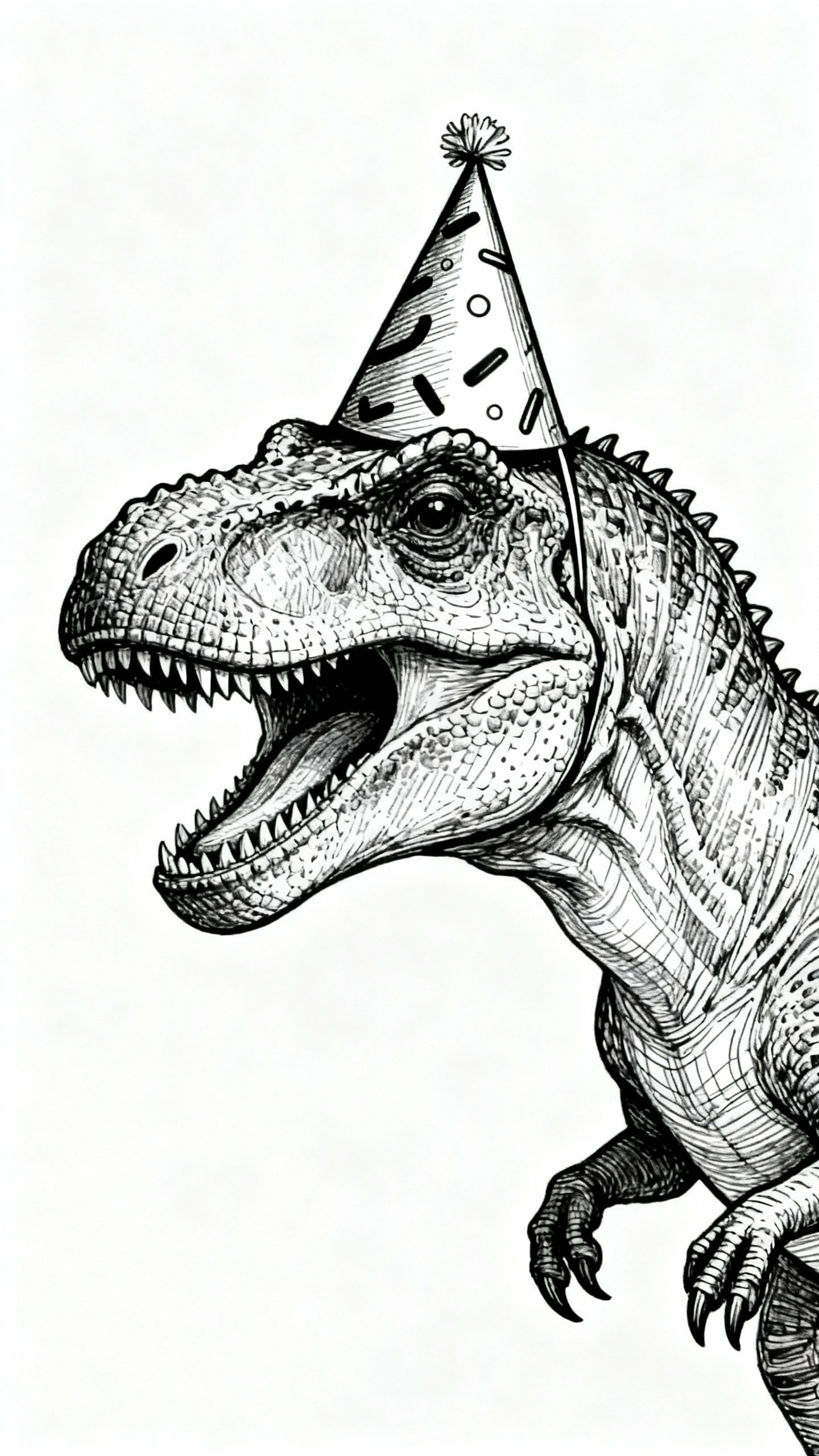
You get total control. You can tailor pages to your kid’s interests—dinosaurs wearing hats, underwater robots, unicorns that love pizza.
You can also tie it to a theme: a birthday party, a school unit, or a family trip.
Plus, it becomes a keepsake. Kids can help design it, and you’ll end up with a book full of inside jokes and memories. FYI, store-bought books can’t compete with that.
Start With a Theme (Or Don’t—But You Should)
A theme makes everything easier.
It keeps the art consistent and makes the book feel intentional, not random. You can still throw in a few wild cards for fun.
- Popular themes: Space adventure, animals, vehicles, fairy tales, careers, seasons, sports.
- Educational themes: Alphabet animals, numbers 1–20, shapes, life cycles, community helpers.
- Personalized themes: “Our Family Vacation,” “My Pet’s Busy Day,” or “My Favorite Foods.”
Pro tip: Match difficulty to age
For toddlers, use big shapes and minimal detail. For older kids, add patterns, small elements, and backgrounds.
IMO, a mix works best—some quick wins, some detailed pages for quiet time.
Pick Your Tools: Digital vs. Hand-Drawn
You can go full analog with markers and paper or go digital with apps. Both work great.
Choose what fits your comfort level and your timeline.
- Hand-drawn: Use black fineliners on white paper. Keep lines clean. Scan with a phone app like Adobe Scan, Genius Scan, or your camera in good light.
- Digital: Use Procreate, Adobe Fresco, Krita, or even Google Drawings.
Work in black lines on a white canvas.
- Hybrid: Sketch on paper, ink on an iPad, then export as PDFs.
Settings that make life easier
- Page size: US Letter (8.5×11) or A4 for easy printing.
- Line weight: 3–6 px digitally, or a 0.5–0.8 mm fineliner. Thick lines help kids stay within edges.
- Resolution: 300 DPI for crisp prints.
Design Pages Kids Actually Want to Color
Think like a kid. Big shapes, a clear subject, and spaces large enough for chubby crayons.
No microscopic polka dots unless you enjoy hearing, “This is too hard.”
- Start with a focal point. One big character or object per page. Add simple background elements like clouds or stars.
- Use bold outlines. Keep details inside bold borders so colors don’t bleed visually.
- Leave white space. Busy pages feel overwhelming. Give space to color without chaos.
- Add playful prompts. “Give the dragon spots!” or “Draw your favorite snack on the picnic blanket.”
- Mix difficulty. Alternate simple and detailed pages to keep kids engaged.
Easy page ideas
- Big friendly animal with simple patterns on the body
- City street with 3–4 cars and a few buildings
- Underwater scene with 1 big whale and small fish
- Robot with big shapes and buttons to color
- Alphabet pages: “A is for Astronaut” with a giant A to color

Add Fun Extras (Because Kids Love Surprises)
Coloring is the star, but extras keep the book fresh.
They also stretch attention spans and sneak in learning without anyone noticing.
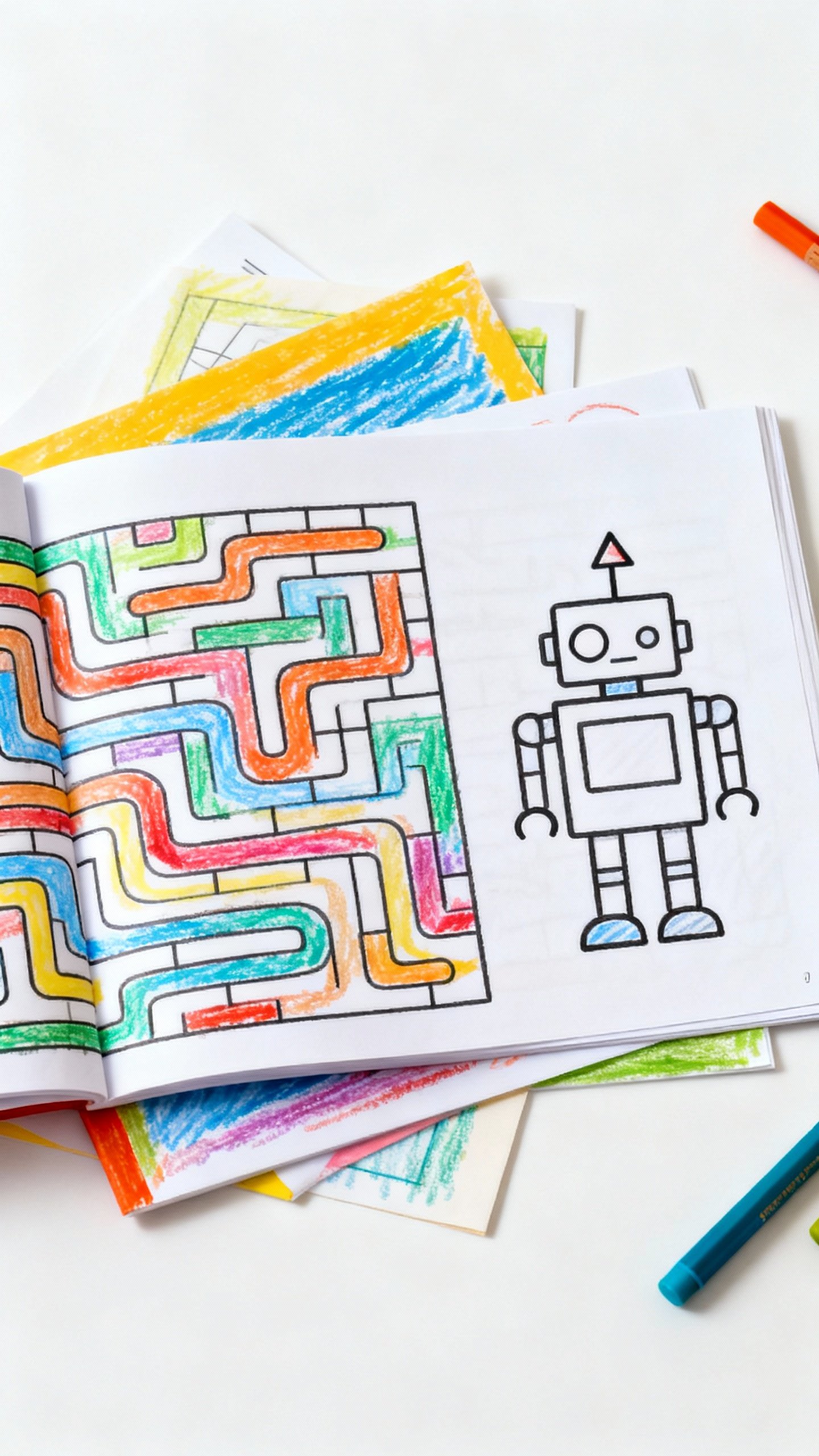
- Mini games: Simple mazes, “spot 5 stars,” or connect-the-dots up to 20.
- Story captions: One line per page: “Captain Cat sails to the Moon.” It makes coloring feel like a story.
- Stickers: Print a sticker sheet on label paper with small icons from your theme.
- Color palettes: Add 3–4 suggested colors at the bottom. Kids ignore them half the time, but it looks cool.
Assemble and Print Like a Pro (Without Being One)
You’ve got art. Now turn it into a book that won’t fall apart five minutes in.
You have options based on effort and budget.
Simple and fast (home print)
- Export pages as PDFs or high-res PNGs.
- Use a free tool (Canva, Google Docs, or LibreOffice) to arrange pages in order.
- Add a simple cover: big title, your kid’s name, and a fun doodle.
- Print on 24–32 lb paper so markers don’t bleed through easily.
- Bind with a stapler on the spine, a 3-hole punch with ribbon, or a cheap report cover.
Polished and sturdy (copy shop)
- Bring a PDF with bleed margins (0.25″).
- Ask for slightly thicker interior pages and a cardstock cover.
- Choose coil or comb binding so the book lies flat.
Eco and budget tips
- Print double-sided with lighter pages on the back (mazes, doodle prompts).
- Keep margins wide so little hands can hold the book without blocking art.
Make It Personal (This Is the Good Stuff)
Personal touches turn a coloring book into a memory book. Kids light up when they see their world reflected back at them.
- Custom names: “A Coloring Adventure for Maya.” Put their name on a few pages too.
- Family cameos: Turn a family photo into a simple line drawing. Keep features playful, not too detailed.
- Pet pages: Trace your pet’s silhouette for an easy, cute page.
- Events: Add pages from birthday parties, trips, first day of school.
Quick method to convert photos
- Use a high-contrast photo.
- Run it through a “posterize” or “threshold” filter in a free editor (Photopea, GIMP).
- Clean the lines with an eraser tool.
Thicken outlines.
Test With Real Kids (Your QA Team)
No offense to grownups, but kids give the best feedback. Give them a few pages and watch how they use them. Do they ignore tiny details?
Do they love stickers? Adjust accordingly.
- If they struggle, simplify shapes and increase line thickness.
- If they finish too fast, add patterns or background elements.
- Ask which pages they want more of. Then make more of those.
Optional: Turn It Into a Gift or Mini Business
Want to go big?
You can make gift versions or even sell your coloring books. FYI, this part is totally optional—fun project first, world domination later.
- Gifts: Bundle with crayons, stickers, and a custom cover. Instant party favor.
- Digital downloads: Sell printable PDFs on Etsy or Gumroad.
- Print-on-demand: Services like KDP Print let you upload a PDF and sell softcover books.
Keep margins and black-only interiors to cut costs.
Legal basics (not scary, promise)
- Use original drawings or properly licensed assets.
- Avoid trademarked characters unless you have permission.
- Include a small copyright notice on the back page.
FAQ
Q: What age range works best for a DIY coloring book?
A: Ages 3–10 love them. Keep lines thick and shapes big for younger kids. Add details, patterns, and mini games for older ones.
You can include a “choose your challenge” page for mixed ages.
Q: How many pages should I include?
A: Sweet spot: 15–25 pages. That gives variety without turning assembly into a chore. If you plan a party favor, 10–12 pages works great.
Q: What paper should I use to prevent bleed-through?
A: Use 28–32 lb (100–120 gsm) for markers and heavy coloring.
For crayons and colored pencils, 24 lb is fine. Put a “coloring shield” sheet behind pages if kids use juicy markers.
Q: Do I need drawing skills?
A: Not at all. Trace simple shapes, use basic silhouettes, or combine simple icons.
You can also use shape tools digitally. Clean lines + clear subjects win over fancy art, IMO.
Q: Can I include educational content without making it boring?
A: Absolutely. Pair coloring with short prompts: “Circle all the triangles,” “Color all even numbers blue,” or “Find the animal that doesn’t live in the ocean.” Keep it playful and brief.
Q: What’s the fastest way to make one today?
A: Pick a theme, sketch 10 simple pages (one big character each), add a plain cover, print on 24–28 lb paper, and staple.
Done in an afternoon. You can always add more pages later.
Conclusion
Creating a kids’ coloring book feels surprisingly doable once you start. You choose the theme, the pages, and the little surprises that make kids grin.
Keep it simple, make it personal, and don’t aim for perfection—aim for fun. And if a unicorn ends up driving a spaceship? Honestly, that’s the magic.
Explore More on FreeKidsHub
Jump into your favorite category for easy printables, fun activities, and family-friendly ideas — all in one place.
Tip: Add this block to the end of every post for stronger internal links ✨