
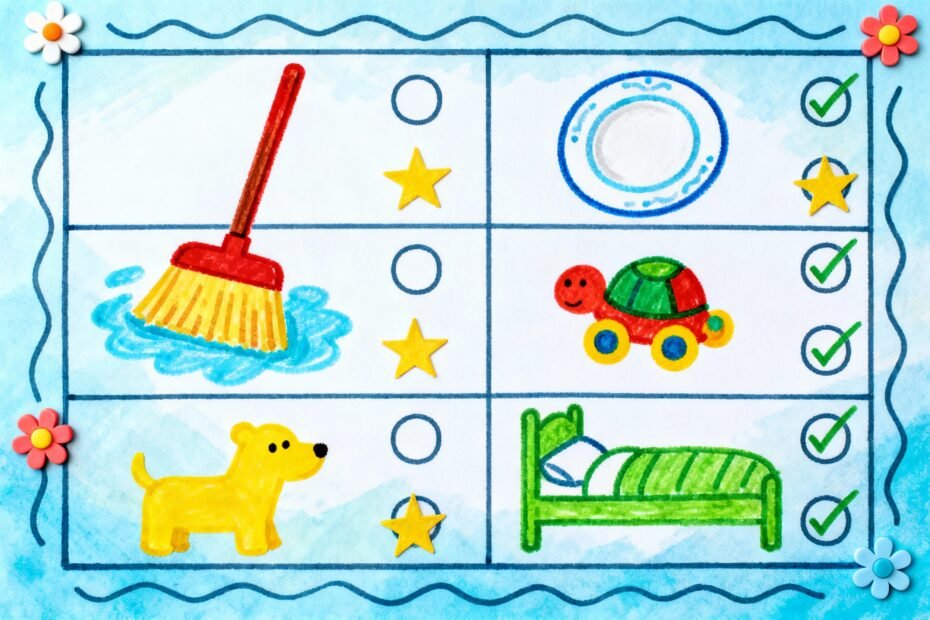
Parenting hack alert: chore charts don’t have to feel like nagging wrapped in glitter. The right DIY chart can turn “Ugh, do I have to?” into “Can I get my sticker now?” Kids love structure when it feels like a game, and parents love not stepping on LEGOs at 2 a.m. Win-win.
Let’s build chore charts that actually get used—and maybe even spark a little pride.
Why Chore Charts Flop (And How We Fix Them)

Most charts fail because they try to do too much, look boring, or get forgotten after day three. Classic. We can fix that with three rules: keep it visual, keep it simple, and make it rewarding.
- Visual: Pictures beat text for younger kids.
Icons = instant clarity.
- Simple: 3–5 chores max for little ones. More than that and you’re running a small startup.
- Rewarding: Kids need feedback now, not “we’ll see on Sunday.” Stickers, tokens, or immediate points keep momentum.
Pick Your Chart Style (Based on Your Kid, Not Pinterest)
Different kids, different brains. Choose a chart that matches your child’s age and motivation style.
IMO, the easiest way to nail this is to test one for a week and tweak.
- Sticker Chart: Best for ages 3–6. One sticker per completed chore. Simple, cute, effective.
- Token Economy: Give tokens (pom-poms, poker chips) for chores.
Trade them for rewards. Great for ages 6–10.
- Magnetic Board: Move magnets from “To Do” to “Done.” Super visual. Perfect for kids who need that physical “ta-da.”
- Dry-Erase Checklist: For ages 8+.
Clear list + checkboxes = responsibility training wheels.
- Routine Cards: Picture cards on a ring for mornings/evenings. Use for kids who resist lists but love control.
How to Build a DIY Chart (With Stuff You Already Own)
Let’s keep it budget-friendly. No need to order a $40 “family command center” unless you really want an excuse to label things.
Here are four fast builds.
1) Sticker Chart on Paper
- Print or draw a simple grid. Rows = chores, columns = days.
- Add icons for chores: bed, broom, toothbrush, toy bin.
- Let your kid choose stickers. Ownership matters.
- Pro tip: Laminate or slip into a sheet protector so you can reuse.
2) Magnetic “To Do / Done” Board
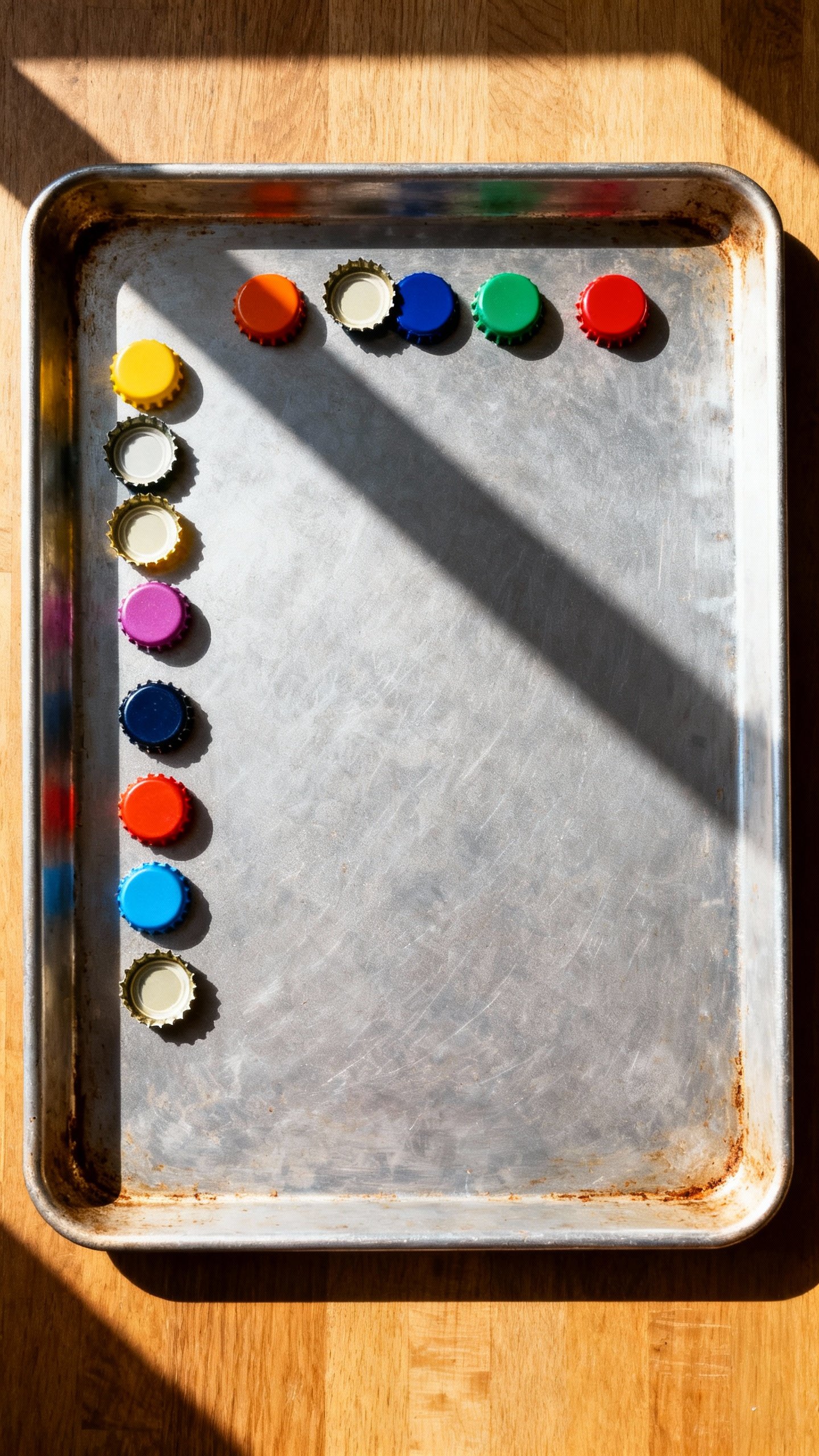
- Grab a cheap magnetic whiteboard or a baking sheet.
Yes, a baking sheet.
- Make chore magnets using bottle caps or cardstock + adhesive magnets.
- Stick chores on the left, move them to the right when finished. Satisfaction unlocked.
3) Token Jar System
- Two jars per child: “Earned” and “Spent.”
- Write chores on a card with token values (1–3 tokens each).
- Rewards menu: 5 tokens = extra story, 10 = choose dessert, 20 = movie night.
- FYI: Keep token values small so kids redeem often and stay motivated.
4) Routine Flip Cards
- Cut index cards, add images/words for each step: brush teeth, get dressed, feed pet.
- Hole-punch and clip onto a ring. Kids flip as they finish.
- Use morning and evening sets to reduce “What’s next?” chaos.
Choose Chores That Match the Child (Not Your Fantasy)
Set chores that kids can actually do well.
If the job always ends in tears, it’s not age-appropriate—or it needs better instructions.
- Ages 3–4: Put toys in bin, deliver laundry to basket, wipe table with help, water plants.
- Ages 5–6: Make bed, feed pet, set napkins/utensils, sort socks.
- Ages 7–9: Load dishwasher, vacuum small area, pack lunch with guidance, wipe counters.
- Ages 10–12: Take out trash, manage laundry start-to-finish, clean bathroom surfaces, cook simple meals.
Teach, Then Step Back
- Model once: Do it with them. Narrate steps.
- Practice together: Share the job for a few days.
- Hand it off: Inspect and praise. No micro-managing (I know, it’s hard).

Motivation That Doesn’t Backfire
Rewards work.
Bribes don’t. What’s the difference? Timing and tone.
You set expectations ahead of time, not mid-meltdown at 7:42 a.m.
- Immediate feedback: Stickers, checkmarks, or tokens right after completion.
- Short-term rewards: Screen time tickets, choosing dinner music, extra bedtime story.
- Long-term rewards: Weekend outing, later bedtime on Friday, saving for a small toy.
- Non-monetary wins: Kids love control—let them pick Saturday breakfast or the family board game.
Avoid These Traps
- Don’t pay for every single chore: Mix “family jobs” (unpaid) with “bonus jobs” (paid) to teach contribution and initiative.
- Don’t remove earned rewards: Natural consequences beat punishment. If they earned it, they keep it.
- Don’t let charts become wallpaper: Review daily. Celebrate effort, not perfection.
Make It Stick: Routines and Reviews
Consistency beats intensity.
A flashy chart works once. A simple habit works forever. Set short check-in rituals so the chart never disappears under a pile of mail.
- Morning huddle: 2-minute review of today’s chores.
That’s it.
- After school: Snack first, then one chore. Tie it to a trigger.
- Evening reset: Quick pass-through to move magnets, add stickers, and tally tokens.
- Weekly tweak: Sunday night swap: keep 2 chores, change 1. Novelty keeps attention.
When Kids Push Back
- Offer choices: “Do you want to feed the pet or wipe the table?”
- Use time limits: “Let’s beat the timer—3 minutes to pick up blocks.”
- Connect to purpose: “We all help because we all live here.” Simple, repeatable, true.
Keep It Fun (Because Boredom = Mutiny)
Fun doesn’t mean chaos.
It means a little personality and plenty of praise. No one wants a chore chart that vibes like a parking ticket.
- Theme it: Space, jungle, superheroes—whatever your kid loves.
- Add humor: Rename chores: “Dino feeding” for pet duty, “Crumb patrol” for sweeping.
- Use music: “Pick-up playlist” for 10-minute tidying sprints.
- Celebrate: Friday “Chore Champions” shout-out at dinner. Cheap and powerful.
FAQ
How many chores should I assign per day?
Start small.
For ages 3–6, pick 2–3 chores. For ages 7–10, try 3–5. Older kids can handle a few more, especially if you rotate tasks.
If your child starts missing chores, scale back and rebuild momentum.
What if my child refuses to use the chart?
Involve them in the setup. Let them choose the design, stickers, and even one or two chores. Offer choices, use timers, and pair chores with positive routines.
If needed, add a tiny incentive for using the chart itself for the first week.
Should I pay allowance for chores?
IMO, use a hybrid. Keep core “family jobs” unpaid so kids learn contribution. Offer paid “bonus jobs” for extra effort—yard work, washing the car, organizing the pantry.
This teaches both responsibility and money skills without turning every task into a transaction.
How do I handle siblings of different ages?
Give each child their own chart with age-appropriate chores. Rotate any “unfair” jobs weekly. Use team rewards occasionally—if everyone hits their goals, the family earns a movie night.
Collaboration without constant comparisons.
What if my kid does a chore poorly?
Teach the skill instead of redoing it quietly. Break it into steps, model once, then give a simple checklist. Praise effort and specific improvements: “You lined up the shoes perfectly today—nice eye!” Feedback fuels progress.
How long should we keep the same chart?
Change formats when interest fades or your child outgrows it.
Usually every 2–3 months. Keep the structure but refresh the look, swap chores, or upgrade the reward menu. FYI, novelty helps attention, not discipline—so keep the rules steady.
Conclusion
You don’t need a perfect chore chart.
You need one your kid understands, likes, and actually uses. Start simple, keep it visual, and reward effort right away. Tweak weekly, laugh often, and remember: the goal isn’t spotless floors—it’s building capable kids who feel proud of helping.
Everything else is a bonus glitter sticker.
Explore More on FreeKidsHub
Jump into your favorite category for easy printables, fun activities, and family-friendly ideas — all in one place.
Tip: Add this block to the end of every post for stronger internal links ✨