
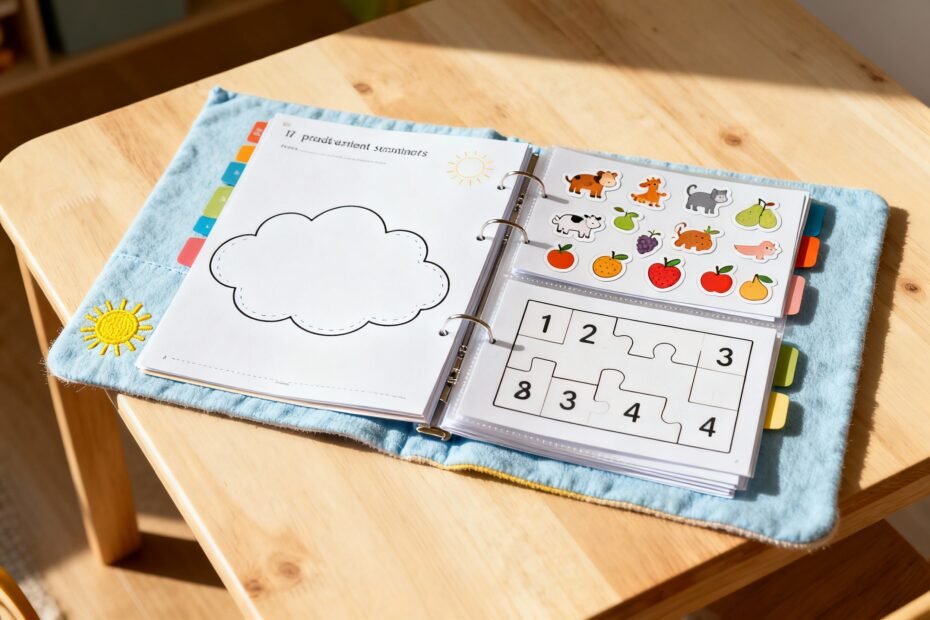
Let’s make your preschooler’s new favorite thing: a simple, grab-and-go activity binder that saves your sanity and keeps little hands busy. No laminator? No problem.
No Pinterest-perfection? Even better. You’ll build it once, then reuse it a hundred times—car rides, waiting rooms, rainy days… you get the idea.
This DIY guide gives you everything you need to make one fast, with free printable ideas and zero fluff. Ready to feel smugly prepared?
Why an Activity Binder Beats Yet Another Toy

You can toss this binder in a bag and keep your kid engaged anywhere. It organizes activities so you don’t have to dig for crayons under the car seat (been there).
Plus, you can swap pages as your child grows. It’s a system, not a one-and-done project.
And IMO, it strikes the sweet spot: low effort for you, high reward for them. FYI, your binder can be as simple or fancy as you want—start small and build over time.
Gather Your Supplies (Keep It Simple)
- 1 sturdy 1″ or 1.5″ binder with a clear front pocket (for a cute cover page)
- 20–30 sheet protectors (glossy works great for dry-erase)
- Dry-erase markers (fine tip) and a small eraser or cloth
- Adhesive Velcro dots (optional, for matching and sequencing games)
- Cardstock for durable pages
- Zip pencil pouch that clips into the binder (for markers, dice, counters)
- Free printables (keep reading for ideas and links guidance)
That’s it.
No laminator required. Sheet protectors do the heavy lifting and let you reuse pages forever.

What to Include: Pages That Kids Actually Use
You want variety, not clutter. Mix quick wins with longer activities so your kid doesn’t bail after 30 seconds.
- Tracing and Pre-Writing: Lines, shapes, zig-zags, name tracing.
- Alphabet Play: Letter matching, find-the-letter pages, beginning sounds.
- Numbers and Counting: Count-and-circle, dot marker pages, roll-and-cover games.
- Sorting and Matching: Colors, sizes, patterns, shadows, animal homes.
- Fine Motor Fun: Connect the dots, mazes, sticker paths.
- Weather/Calendar Pages: “Today is…”, days of the week, feelings check-in.
- Quiet Games: I-Spy, spot the difference, simple bingo.
Pro Tip: Make It Self-Check
Add small icons, color borders, or numbers on matching pieces so kids can check their own work.
Independence = you drinking your coffee while it’s still hot. Dream big.
Free Printable Ideas (And How to Find Great Ones)
You can build an entire binder with free resources. Search terms matter.
Try these:
- “free preschool binder printables”
- “free preschool tracing sheets pdf”
- “alphabet mats free printable”
- “counting mats 1-10 free”
- “I spy printable preschool free”
Look for PDFs that print cleanly and don’t drown you in ink. Many educational blogs offer seasonal packs—download a few and rotate them. IMO, avoid 50-page monster packs at first.
Start with 10–15 solid pages your child likes and expand.
DIY Your Own Pages
Draw simple lines, shapes, and paths on blank paper and slip them into a sheet protector. Done. You can also write your child’s name in dotted lines with a highlighter and have them trace with dry-erase.
No printer, no problem.
How to Assemble Your Binder (Fast)
- Print on cardstock. It lasts longer and doesn’t buckle in sheet protectors.
- Slide pages into sheet protectors. Put writing/tracing pages back-to-back to save space.
- Add a cover page. Your kid’s name + stickers = instant ownership.
- Clip in a zip pouch. Store markers, mini cloth, stickers, and small counters (buttons, pom-poms).
- Optional: Velcro magic. For matching games, print pieces, cut them out, and stick Velcro dots—one on the page, one on the piece.
Organize by Color Tabs
- Red: Letters
- Blue: Numbers
- Green: Fine motor
- Yellow: Games
- Purple: Seasonal
Kids learn the system fast. “Find the yellow tab and pick a game” feels empowering and keeps the chaos down.
Make It Engaging Without Making It Complicated
Simple tweaks keep things fresh. Rotate 3–5 pages weekly. Add seasonal themes (pumpkins, snowflakes, beach).
Celebrate effort, not perfection—preschoolers love praise more than perfect pen control.
- Use timers: Two-minute “beat the timer” for quick tasks.
- Offer choices: “Pick any two pages, then a game.”
- Add movement: After a tracing page, do five silly jumps. Yes, you too.
Build a Binder Routine
Try a 10–15 minute binder time after snack or before screen time. Predictable = fewer battles.
You can even make a tiny checklist: trace, count, game, sticker. Kids love checking boxes like tiny CEOs.
Skills You’ll Sneak In (Shh, Don’t Tell Them)
- Fine motor: Tracing, peeling stickers, drawing inside paths.
- Phonological awareness: Letter sounds, rhyming matches.
- Number sense: Counting, one-to-one correspondence, simple patterns.
- Executive function: Following steps, task completion, self-checking.
- Language: Vocabulary from themes: weather, animals, foods.
It looks like play because it is play. The learning rides shotgun.
Maintenance: Keep It Fresh With Almost No Work
- Swap 3 pages weekly. Retire what’s boring, bring back old favorites.
- Wipe pages immediately. Dry-erase can ghost if you leave it on for days.
- Store small pieces in labeled envelopes. Tape them inside the sheet protector so they don’t escape.
- Print in batches. Once a month, add 5 new pages.
Done.
FYI: If your marker dies in the car, twist up a crayon and use that. It erases fine from most sheet protectors with a baby wipe.
Free DIY Page Ideas You Can Make Tonight
- Name Practice: Write your child’s name in dots. Add a photo of them at the top for fun.
- Shape Roads: Draw thick-shape outlines (circle, square, triangle) and drive a toy car along them.
- Sticker Paths: Draw a wiggly line.
Kids place small stickers along the path—great fine motor work.
- Roll & Cover: Draw a 1–6 grid with simple pictures. Roll a die, cover the match with a counter.
- Color Hunt: Glue color swatches on a page. Kids find and match objects from a small bag of colored buttons or cut-outs.
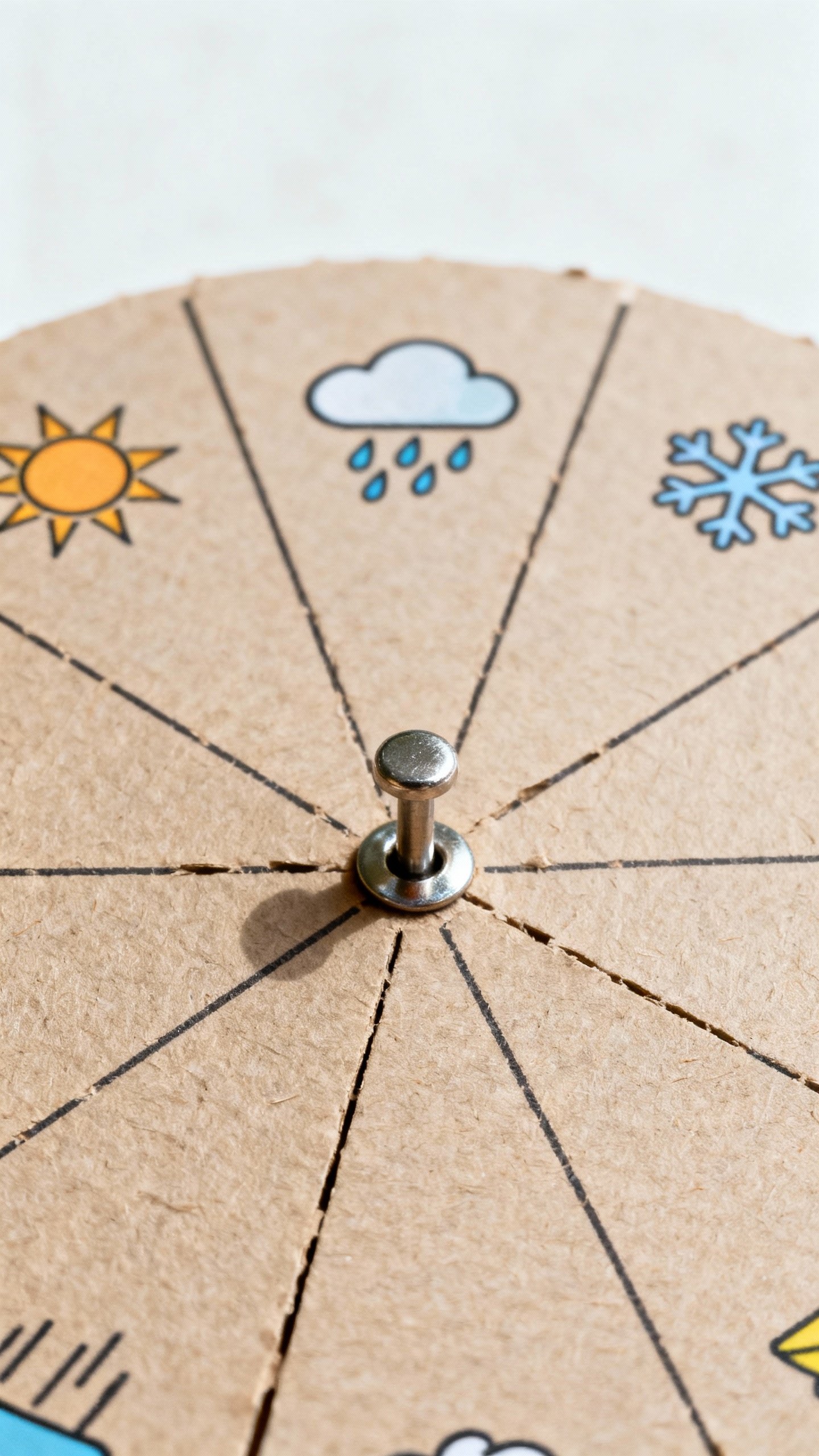
- Weather Wheel: Print or draw icons, add a brad fastener, and let them set today’s weather and outfit.
FAQs
What age is this binder best for?
Most kids enjoy it from ages 3–5, but you can tweak the pages for toddlers (bigger shapes, simple matching) or kindergarteners (CVC words, simple addition).
Meet your child where they are and level up slowly.
Do I need a laminator?
Nope. Sheet protectors plus dry-erase markers work great. If you want super-durable Velcro activities, laminating helps, but it’s optional.
Start simple and upgrade if you love it.
How many pages should I include?
Start with 10–15. That gives enough choice without overwhelm. Rotate a few each week and watch which ones your child requests—those are keepers.
What if my child hates worksheets?
Lean into games and hands-on pages: I-Spy, mazes, sticker paths, matching with Velcro, roll-and-cover.
Skip heavy tracing for now. Make it playful first, pencil skills second.
How do I prevent losing all the little pieces?
Store cut pieces in small labeled envelopes or zip bags and tape the bottom edge inside the sheet protector. Teach a routine: finish, check, return pieces, zip the pouch.
Repetition works.
Any screen-free rewards to keep them motivated?
Stickers, stamps, choosing the next page, or a two-minute dance break. Also, praise the process: “You focused so well!” works better than “That’s perfect.”
Conclusion
You don’t need a craft room or a teaching degree to make a preschool activity binder. You need a binder, sheet protectors, a few markers, and a tiny bit of strategy.
Keep it light, keep it fun, and rotate often. Before long, your kid will ask for “their binder,” and you’ll feel like a planning wizard—IMO, the best kind of magic.
Explore More on FreeKidsHub
Jump into your favorite category for easy printables, fun activities, and family-friendly ideas — all in one place.
Tip: Add this block to the end of every post for stronger internal links ✨