
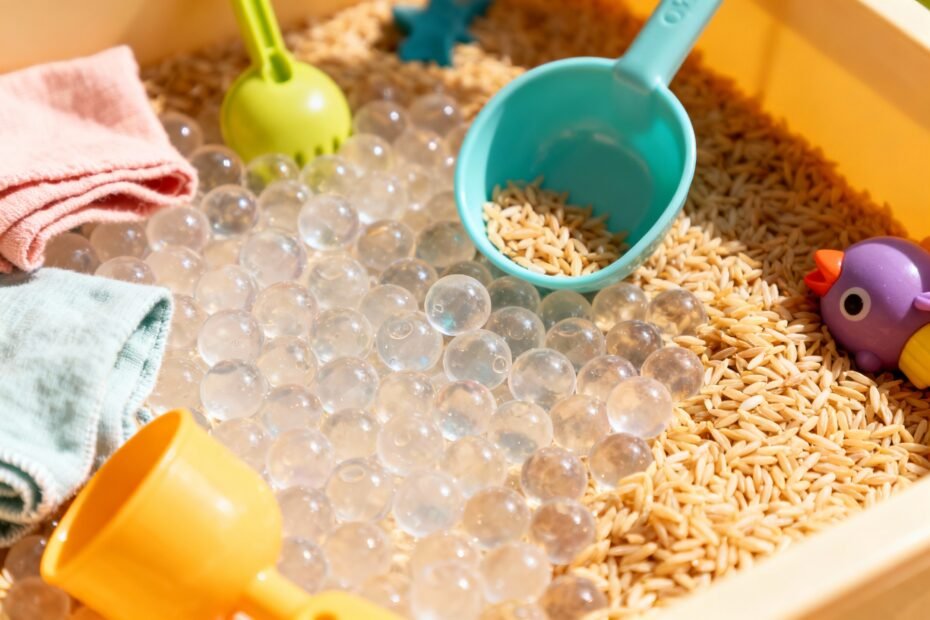
You want to build sensory bins that actually get used—and loved? Perfect. Sensory play offers kids with autism a safe, fun way to explore textures, practice motor skills, and regulate emotions.
The best part: you can DIY these bins with stuff you already have at home. Let’s make sensory magic without blowing your budget—or your sanity.
Why Sensory Bins Work (And Why Kids Keep Coming Back)
Sensory bins engage multiple senses at once, which can help kids calm down, focus, and learn. They also let kids explore at their own pace, which reduces pressure and boosts confidence.
And yes, they’re secretly educational—fine motor practice, sorting, measuring, language building—without a worksheet in sight. Pro tip: Watch how your child responds to different textures. Some kids crave squishy, others prefer dry and crunchy. You’ll tailor bins better once you notice those preferences.
Starter Kit: What You Actually Need
You don’t need a Pinterest-perfect setup.
You need a container and some fillers. Done. Here’s a simple list to get rolling.
- Container: A shallow storage bin with a lid, a dishpan, or a large baking tray with high sides.
- Base fillers: Rice, beans, pasta, kinetic sand, water beads (use with caution), water, cornmeal, oats.
- Tools: Measuring cups, spoons, funnels, scoops, tweezers, tongs, small containers, muffin tins.
- Add-ons: Mini figures, cars, plastic animals, letters, shells, foam shapes, pompoms, pipe cleaners.
- Cleanup crew: A cheap tablecloth or shower curtain liner under the bin, hand broom, towel.
Safety and Sensory Considerations
- Supervise, always. If your child mouths items, skip small pieces like beans or water beads.
- Allergies matter. Avoid common allergens (e.g., wheat-based pasta or oats) if needed.
- Noise sensitivity? Choose softer fillers (kinetic sand) over loud ones (dry beans).
- Mess tolerance: Start with less messy bins until everyone trusts the process.
DIY Sensory Bin Ideas: Easy Wins for Busy Days
Short on time?
Try these no-fuss ideas that you can set up in five minutes. They feel like play but build real skills.
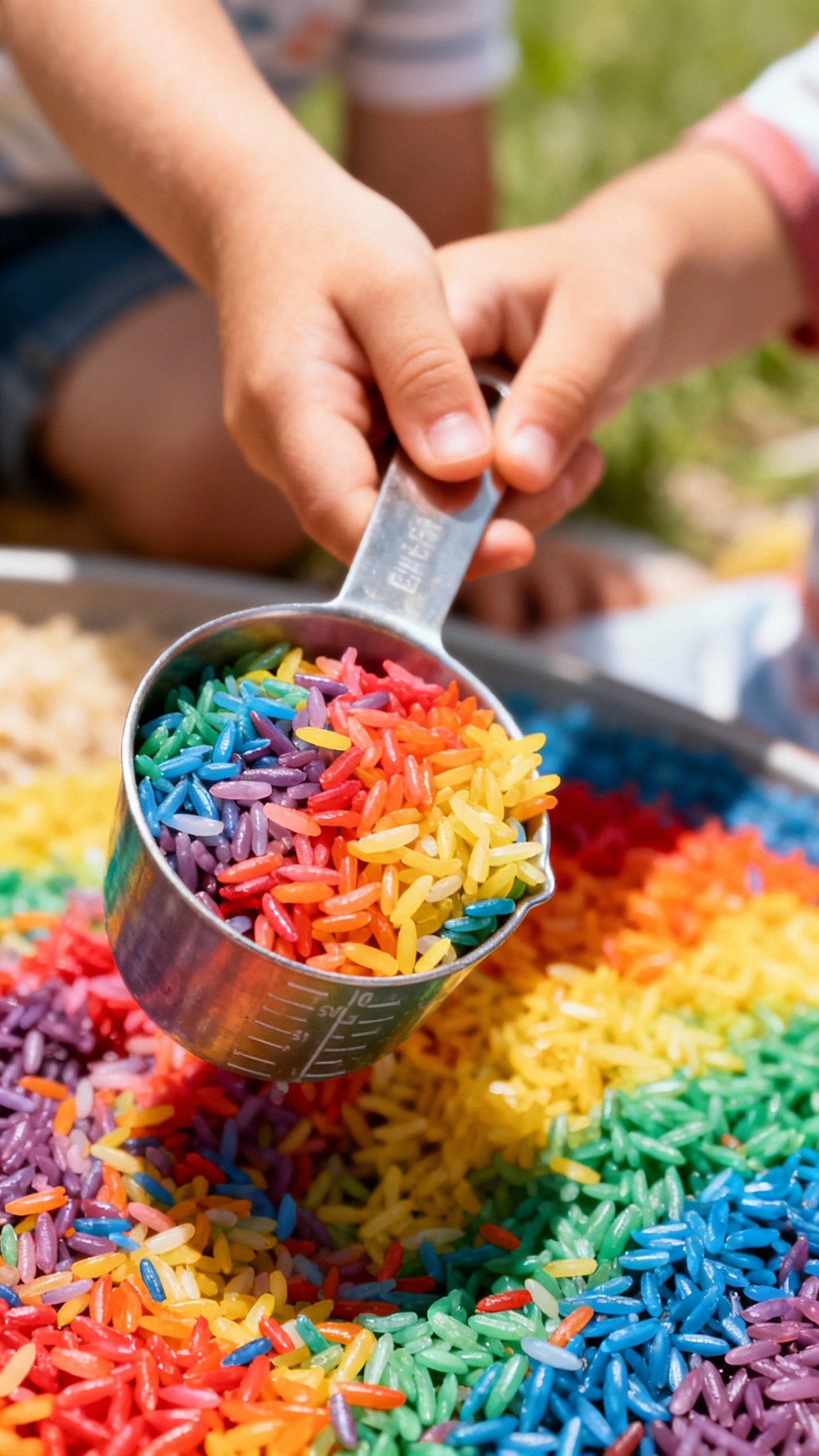
1) Rainbow Rice Dig
Dye rice with a few drops of food coloring and a splash of vinegar, then dry it. Add cups, spoons, and hidden treasures like buttons or plastic animals.
Kids love the sound and flow.
- Skills: Scooping, pouring, color matching, turn-taking.
- Swap: Use plain rice if dyeing feels like too much. FYI, plain works great.
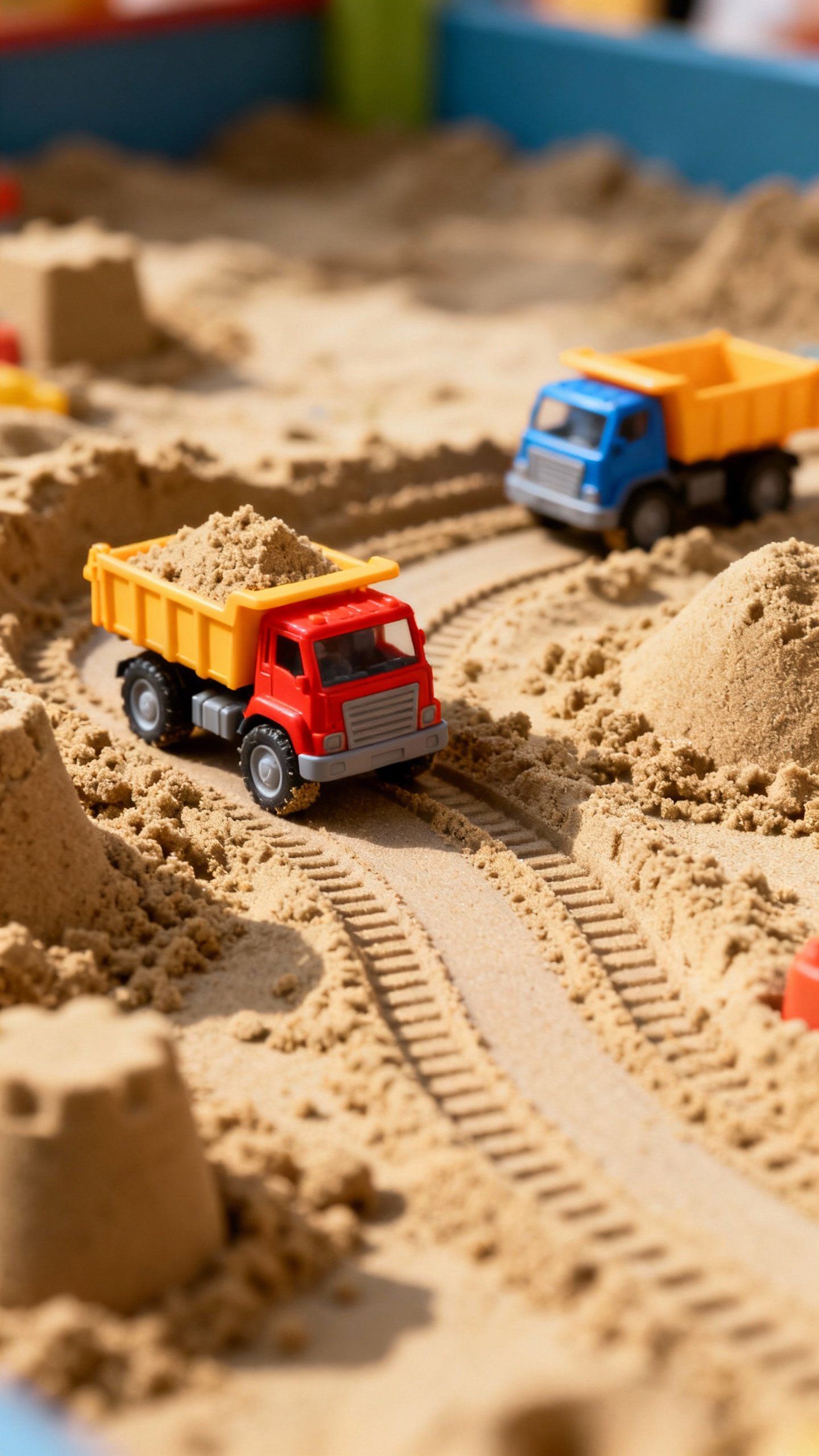
2) Kinetic Sand Construction Zone
Dump kinetic sand into a bin and add small trucks, rocks, and sticks. Build roads, bury “fossils,” or stamp letters.
- Skills: Fine motor strength, imaginative play, letter recognition.
- Simplify: Use damp play sand outdoors if kinetic sand isn’t available.
3) Water Play Science
Fill a bin with warm water and toss in cups, funnels, sponges, and ping-pong balls.
Add a drop of dish soap for bubbles if your child loves foam.
- Skills: Cause and effect, comparing volume, hand-eye coordination.
- Note: Water soothes many kids. Keep towels nearby and call it sensory therapy.
4) Nature Treasure Hunt
Add dry leaves, pinecones, smooth stones, sticks, and a magnifying glass. Make it a mini forest scene.
- Skills: Texture tolerance, vocabulary (rough/smooth), sorting by size or type.
- Optional: Spray a tiny bit of water for a damp-earth feel—great for tactile seekers.
5) Pasta Party
Use dry pasta in different shapes plus bowls and tongs.
You can dye pasta too, but IMO, shapes alone keep it fun.
- Skills: Pincer grasp, sorting, counting.
- Adapt: For mouthing, cook pasta, cool it, and add a bit of oil to prevent sticking.
Sensory Bins for Specific Goals
Want to sneak in therapy goals while they play? Here’s how you tailor bins to your child’s needs.
For Calming and Regulation
- Heavy-work tools: Add scoops with resistance, weighted scoops of beans, or a small hand-crank mixer in water.
- Low-stim fillers: Kinetic sand, cloud dough (flour + oil), or dry oats.
- Predictable play: Repetitive actions like “scoop-transfer-dump” can help settle the nervous system.
For Fine Motor Skills
- Tweezer and tong bins: Pick up pompoms, beads, or small cubes and sort into an ice cube tray.
- Hide-and-pincher: Bury coins in rice and have your child “rescue” them using a pincer grasp.
- Cutting practice: Use child-safe scissors with play dough “noodles.”
For Language and Social Play
- Theme bins: Farm, ocean, or construction. Model short phrases: “Find cow,” “Cow jumps,” “Truck dumps.”
- Turn-taking: Use a timer and pass a special scoop back and forth.
Simple, predictable, successful.
- Labeling and following directions: “Find three blue shells,” “Pour until full,” “Hide and tell me where.”

Budget-Friendly Fillers You Already Own
Before you hit “add to cart,” raid your pantry and craft drawer. You’ll save money and get creative.
- Rice, beans, lentils, cornmeal, oats
- Pom-poms, pipe cleaners, felt scraps, foam stickers
- Bottle caps, cupcake liners, clothespins, paper straws
- Shredded paper, gift wrap filler, newspaper strips
- Ice cubes, frozen peas (yes, really), citrus slices in water
Eco and Reuse Tips
- Store clean dry fillers in zip bags or containers for months of reuse.
- Compost natural items like leaves and twigs after play.
- Skip glitter. Your vacuum (and the ocean) will thank you.
Make It Themed: Ideas Kids Actually Request
Themes keep interest high and offer built-in stories.
Here are fan favorites.
- Dino Dig: Kinetic sand, small dino bones/toys, paintbrushes for “fossil” dusting, mini rocks.
- Arctic Chill: Ice cubes, cold water, blue glass gems, plastic penguins, spoons. Add salt to melt.
- Garden Grow: Dry beans “seeds,” fake flowers, mini pots, scoop and “plant.”
- Alphabet Hunt: Magnetic letters in rice; call out sounds and match to a simple board.
- Car Wash: Soapy water, sponges, toothbrush, microfiber cloth. Rinse, dry, repeat.
Oddly satisfying.
Quick Sensory Recipes
- Cloud Dough: 8 cups flour + 1 cup vegetable oil. Crumbly and moldable. Add cinnamon for scent.
- Taste-Safe Slime: 2 cups cornstarch + 1 cup warm water (oobleck).
Drippy and weird—in a good way.
- Moon Sand: 4 cups sand + 2 cups cornstarch + 1 cup water. Mix well.
Set Up, Play, Clean Up: Keep It Sane
You want fun, not chaos. A few routines make sensory time smooth.
- Ground rules first: “Fillers stay in the bin,” “Ask before dumping,” “We scoop gently.” Short and clear.
- Prep the zone: Put a mat or sheet under the bin.
Keep a towel and trash bag nearby. Music optional but delightful.
- Timers help: Try 10–15 minute sessions, then pause to transition and reset.
- Clean-up game: “Find all the blue pieces,” “Scoop rice back fastest.” Make it a race, not a chore.
Reading Your Child’s Cues
Watch for signs of overwhelm (averting eyes, leaving, increased stimming) or signs of seeking (hands diving deeper, excited vocalizations). Offer choices: “More rice or switch to water?” You can also add visual supports—a first/then card works wonders.
IMO, choice and predictability beat bribes every time.
Troubleshooting Common Hurdles
- “They won’t touch it.” Start with tools (spoons, cars) instead of hands. Model, don’t push.
- “They throw the filler.” Give a “dump zone” like a second bin or a small bucket. Throwing often signals a need for heavy work—add weighted scoops.
- “Too messy!” Try mess-contained fillers like play dough, kinetic sand, or large pasta.
Or take it outside. FYI, outside is the MVP.
- “Bored already.” Rotate tools, add a theme, or set a mini-mission: “Find five shells.”
FAQ
What’s the best sensory bin filler for beginners?
Start with rice or kinetic sand. Both feel predictable, pour easily, and work with tons of tools.
They also clean up quickly and store well, which your future self will appreciate.
How long should sensory play last?
Aim for 10–20 minutes, especially at first. Quality beats quantity. If your child hyper-focuses and stays regulated, stretch it.
If dysregulation starts, switch or stop—no guilt.
Can I use scented fillers, or will that overwhelm my child?
Scent can add fun, but go slow. Start with mild scents like vanilla or cinnamon and keep it optional. If your child avoids the bin or turns away, skip scents for now.
Are water beads safe?
Use extreme caution.
Water beads pose ingestion and choking risks and can expand. If your child mouths objects or siblings hover, choose safer options like sponges or pompoms. Supervise closely if you use them at all.
How do I store fillers without attracting bugs?
Let everything dry completely, then store in airtight containers or zipper bags.
Add a bay leaf to rice or beans as a natural deterrent, and label bins with the date.
What if my child has tactile defensiveness?
Offer tools first and focus on less intense textures like dry pasta or kinetic sand. Gradually introduce new textures alongside trusted ones. Celebrate tiny steps—touching with one finger counts as progress.
Conclusion
Sensory bins don’t need to be fancy to work—they just need to fit your child.
Start simple, follow their lead, and tweak as you learn what calms, excites, or challenges them. With a few bins and a little creativity, you’ll turn everyday stuff into regulation, skill-building, and joy. And hey, if you keep a lint roller nearby, you’re basically a pro already.
Explore More on FreeKidsHub
Jump into your favorite category for easy printables, fun activities, and family-friendly ideas — all in one place.
Tip: Add this block to the end of every post for stronger internal links ✨