
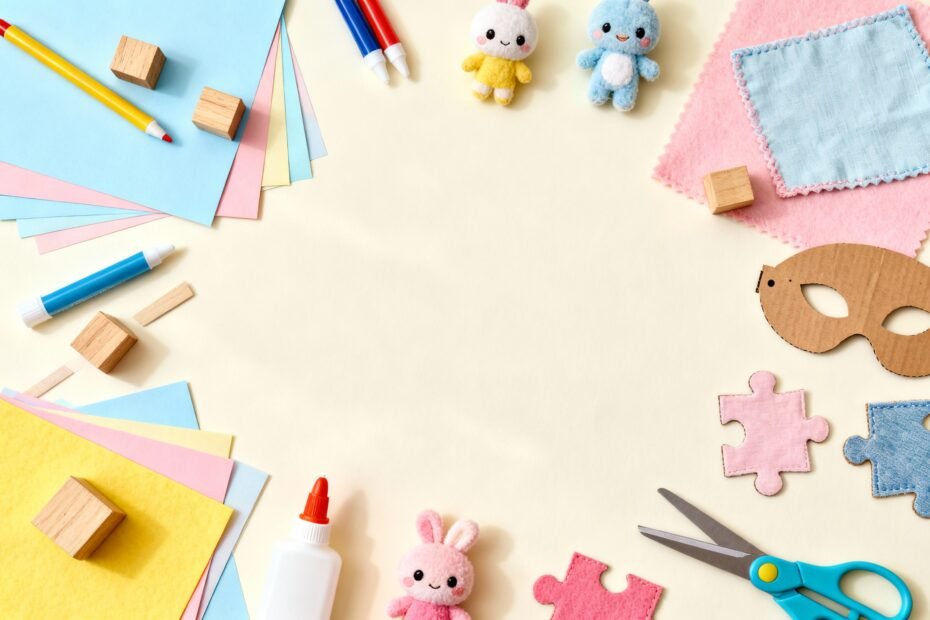
You want your kids off screens without a meltdown? Give them something better: a game they invent, build, and play themselves. A Build-Your-Own Kids Game Kit turns rainy afternoons into mini maker-labs and Saturday mornings into family tournaments.
It’s craft time with a mission, playtime with purpose, and zero “Are we done yet?” vibes. Ready to turn cardboard, stickers, and imagination into epic fun?
Why a Build-Your-Own Game Kit Wins (For Everyone)
Kids love control. They love rules even more when they make them.
With a DIY game kit, they design, decorate, tweak, and test — which sneaks in problem-solving and creativity without anyone noticing. FYI: you also get an easy way to bond without learning 72-page rulebooks. You save money, too.
Instead of buying new games constantly, you get one modular system that morphs into dozens of different games. IMO, that’s the ultimate toy ROI.
What to Put in Your Game Kit
Keep it simple and sturdy. You want materials that feel good in tiny hands and don’t fall apart after one epic session.
- Game board: Foldable poster board or a thick cardboard panel.
Add a rollable mat for travel play.
- Cards: Blank index cards or pre-cut cardstock squares. Toss in card sleeves if your crew treats cards like snacks.
- Dice: Standard six-sided dice plus a few funky ones (D10, D12) for variety and drama.
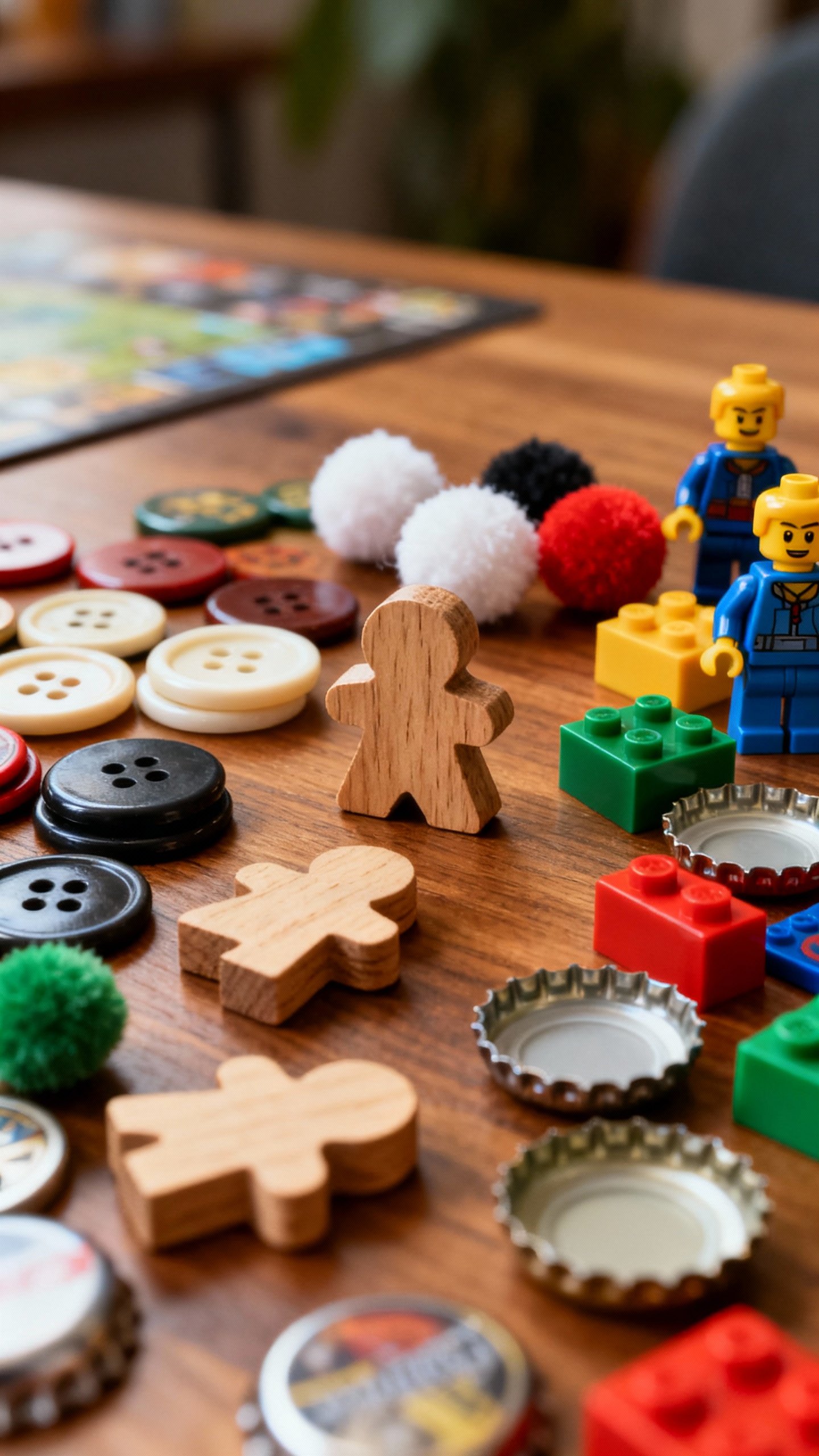
- Tokens & pieces: Buttons, pom-poms, wooden meeples, bottle caps, LEGO minis — whatever sparks joy.
- Spinners & timers: A paperclip-and-pencil spinner and a 1-minute sand timer or phone timer.
- Art supplies: Washable markers, stickers, washi tape, glue stick, colored pencils, and a label maker if you’re feeling fancy.
- Storage: A shoebox or craft caddy with small bins. Label everything.
Future you will thank present you.
Optional but Awesome
- Dry-erase sleeves for reusable boards and sheets
- Sticky notes for quick rule tweaks
- Velcro dots to make modular boards
How to Guide Kids From Idea to Play
You don’t need to be a game designer. You just need a gentle script. Try this four-step flow.
- Pick a theme: Space cats?
Jungle detectives? Pizza ninjas? Anything works, but let the kids call it.
- Choose a goal: “Collect 5 gems,” “Reach the volcano,” or “Solve 3 clues.” Clear goals make everything easier.
- Add actions: On your turn, you can move, draw a card, trade, or build something.
Keep it to 2–3 actions max.
- Test and tweak: Play for 5 minutes, then ask: “Did that feel fair? Too long? Too random?” Then adjust.
Quick Rule Template (steal this!)
- Setup: Place the board.
Each player picks a token. Shuffle the cards.
- Turn: Roll a die and move. If you land on a marked space, draw a card.
Follow the card.
- Win: First to collect 3 star tokens and reach the Portal wins.
Craft Ideas That Become Game Mechanics
This is where art meets strategy. The craft isn’t just decoration — it shapes how the game works.
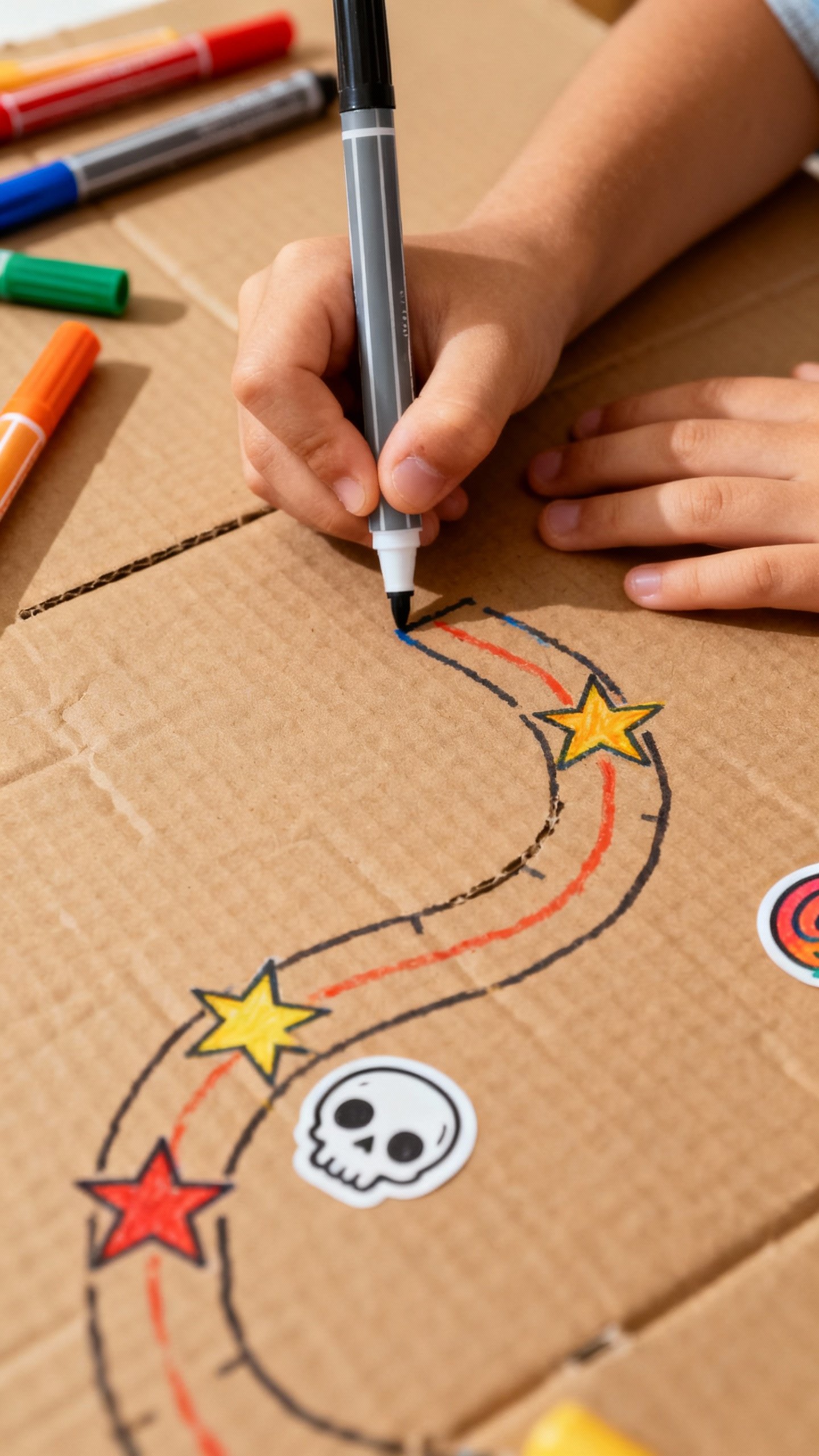
- Path boards: Draw a winding path with special icons (stars = bonus move, skull = lose a turn, heart = trade).
- Modular tiles: Cut the board into squares. Shuffle and lay them out differently each time for new maps.
- Card decks: Make three types: Action, Event, and Treasure.
Color-code the backs with markers or stickers.
- Power-ups: Craft mini badges or tokens that give special moves — a jetpack lets you jump 3 spaces, for example.
- Character sheets: Simple index cards: Name, Power, Weakness. Done.
Theme Mashups That Always Hit
- Cookie Heist: Sneak past the dog, find the cookies, don’t get caught by the grown-ups
- Treasure Planet: Pirate map + wormholes + zero gravity traps
- Eco Heroes: Clean the park, rescue animals, build habitats to score points
Keep the Rules Kid-Friendly
Kids crave clarity. You can deliver that without boring them to tears.
- Use icons everywhere: A lightning bolt for “go again,” a snowflake for “freeze,” a swirl for “swap.”
- Limit text: Short lines on cards, big fonts, lots of color.
- Set a time cap: Aim for 15–25 minutes.
End with a “final round” to keep it exciting.
- Offer catch-up mechanics: Last place gets a bonus card or a free reroll. Keeps it friendly.
Balance Like a Pro (without math headaches)
- Count the “good” and “bad” spaces. Keep them roughly even.
- Make rare cards stronger.
Common cards should be mild.
- Check player turns: Does everyone act every minute? If not, trim downtime.
Playtesting: The Secret Sauce
First drafts rarely shine. That’s normal.
Turn testing into part of the fun.
- Micro-runs: Play 5 rounds, stop, fix one thing, repeat.
- Swap roles: Let kids be the rule explainers. If they can teach it, the rules work.
- Invite a friend: New players expose confusing stuff fast.
Questions to Ask After a Play
- What felt epic? Keep more of that.
- What dragged?
Shorten or cut.
- Who felt stuck? Add a tool to unstick them.
Pack It Up Like a Designer
A tidy kit means faster setup next time and fewer “Where’s the blue die?!” crises.
- Zip bags for decks: Label “Action,” “Event,” and “Treasure.”
- Rule card: One card with Setup, Turn, Win. Laminate if you can.
- Piece tray: Muffin tins or bead boxes keep tokens sorted.
- Version stickers: Put “v1.2” on the rule card after tweaks.
Your mini dev team will love it.
Make It Travel-Friendly
- Use a foldable board or a roll-up mat.
- Swap big tokens for flat cardboard chips.
- Keep a mini kit in a pouch: 2 dice, 20 cards, 10 tokens, mini board.
Three Starter Game Blueprints
Sometimes kids need a spark. Use these as templates, then remix.
- 1) The Great Garden Race
- Goal: Be first to harvest 3 veggies.
- Board: Path through a garden with “Weed” and “Water” spaces.
- Cards: Critters help or hinder (ladybug boosts, rabbit steals).
- Twist: Trade seeds with other players once per game.
- 2) Space Rescue Squad
- Goal: Save 4 astronauts from different planets.
- Board: Modular tiles with wormholes and asteroid fields.
- Cards: Tools (jetpack, tractor beam) and hazards (solar flare).
- Twist: Team mode or solo mode works great.
- 3) Dungeon of Giggles
- Goal: Collect 5 laugh gems by telling jokes or acting silly challenges.
- Board: Rooms with challenge prompts.
- Cards: Joke cards, Challenge cards, Silly Spells.
- Twist: If the table laughs, you get a bonus gem. If not… try again.
FAQs
Q: What age range works best for a build-your-own game kit?
A: Ages 5–12 crush it, with different layers.
Younger kids draw paths and pick actions with help. Older kids write cards, balance rules, and design art. Teens can get deep and essentially become mini designers.
Adults? Also fun, FYI.
Q: How do I keep siblings from arguing during design time?
A: Give roles. One is the Artist, one the Rules Boss, one the Tester.
Rotate every 15 minutes. Also set a “veto budget” — each player gets one veto per session. It sounds goofy, but it keeps peace like magic.
Q: We made a chaotic mess.
How do we fix it?
A: Trim, don’t toss. Remove one card type or reduce the board size. Shorten the win condition.
Add a simple turn structure on a rule card. IMO, less complexity often equals more fun.
Q: What if my kid hates losing?
A: Add co-op modes where everyone wins together. Or use multi-winner conditions: anyone who reaches 10 points by the end qualifies as a “Champion.” You can still have a top score for bragging rights without tears.
Q: Can we sneak in learning without making it feel like homework?
A: Absolutely.
Tie themes to topics: fractions for movement (half the die roll), vocabulary on cards, or geography with map tiles. Hide learning behind cool art and exciting actions, and no one notices — in the best way.
Q: Do we need fancy materials?
A: Nope. Cardboard, markers, and a couple dice can make a legendary game.
Fancy pieces look great, but creativity and clear rules matter more.
Conclusion
Build-Your-Own Kids Game Kits turn creativity into action and chaos into giggles. You craft together, you play together, and you iterate like pros — all with cardboard and imagination. Start simple, test fast, and celebrate every version.
And when your kids ask to “make a new level” tomorrow? That’s the win condition right there.
Explore More on FreeKidsHub
Jump into your favorite category for easy printables, fun activities, and family-friendly ideas — all in one place.
Tip: Add this block to the end of every post for stronger internal links ✨